It’s one of the most common questions women my age type into a search bar, often with a note of real frustration: why is my skin SO dry all of a sudden? The moisturizer that worked for twenty years suddenly isn’t enough. Skin feels tight an hour after applying cream. Makeup sits strangely, catching in dry patches that never used to exist. Sometimes it itches — especially at night — for no visible reason.
If that’s you, I want to tell you two things upfront. First: you’re not imagining it, and you didn’t cause it. Something real and physiological is happening. Second: it responds beautifully to the right care — and the right care is less about buying a richer cream (though that helps) and more about understanding what your skin has stopped doing on its own, then compensating deliberately. The Korean approach to skin hydration, which treats moisture as something you layer and lock in rather than slather on once, happens to be almost perfectly designed for this stage of life.
What Changed: The Estrogen–Skin Connection
Estrogen, it turns out, was quietly doing a lot of work for your skin all those years. It supported oil production, stimulated collagen and hyaluronic acid (your skin’s built-in moisture magnet), and kept the skin barrier — the outermost layer that holds water in — thick and well-maintained.
Through perimenopause and menopause, as estrogen declines, three things happen more or less at once:
Oil production drops. Sebum — which we spent our teens cursing — is actually a natural moisture seal. With less of it, water evaporates from your skin faster. The technical term is transepidermal water loss, and after menopause it measurably increases.
The barrier thins. Your skin’s brick wall — cells held together with lipid “mortar” made of ceramides, cholesterol, and fatty acids — produces less mortar. Tiny gaps let moisture out and irritants in, which is why dryness after 50 so often travels with its unpleasant cousins: itching, stinging, and sudden sensitivity to products you’ve used forever.
Water-holding capacity falls. Skin makes less hyaluronic acid, so even the moisture you do retain is held less efficiently.
Add life’s multipliers — indoor heating and air conditioning, long hot showers, harsh cleansers, dry winter air — and you get that “all of a sudden” feeling. The change was gradual; the tipping point wasn’t.
One more honest note: sudden severe dryness can occasionally signal something beyond hormones — thyroid issues, medication side effects, or skin conditions like eczema. If your dryness comes with rashes, cracking, or doesn’t improve with a month of good care, that’s a doctor visit, not a serum search.
Stop Doing These Three Things First
Before adding anything, subtract. These three habits sabotage midlife skin more than any missing product:
The long, hot shower. I know. It’s one of life’s pleasures. But hot water dissolves your skin’s remaining oils remarkably efficiently — dermatologists compare it to washing dishes in hot water for a reason. Keep showers warm rather than hot, and shorter; your skin will thank you within a week.
The squeaky-clean wash. Foaming cleansers that leave skin “fresh and tight” are stripping the very barrier you’re trying to rebuild. Switch to a low-pH gentle cleanser (my beginner’s product list has an inexpensive favorite), and in the morning consider just a lukewarm water rinse — a standard practice among Korean women with dry skin.
Moisturizing dry skin. This sounds backwards, but hear me out: cream applied to bone-dry skin mostly sits on top. The Korean rule is always apply to damp skin — within a minute of washing, while water is still in the surface. Every product in the routine below assumes damp application. This one free change improves everything else you do.
The Korean Layering Method: Moisture in Three Moves
Western skincare says: wash, then moisturize. The Korean method for dry skin says: put water in, hold it there, seal it down — three distinct jobs, three light layers. It takes ninety seconds and it’s the single biggest upgrade for menopausal dryness.
Move 1 — Put water in: the hydrating toner. On damp, just-cleansed skin, pat in a hydrating toner (rice extract, hyaluronic acid, or birch juice formulas are lovely). For real dryness, do two layers — Korean women call this building “moisture layers,” and some do five or seven. Two is plenty to start.
Move 2 — Hold it there: the humectant serum or essence. A snail mucin essence or hyaluronic acid serum acts like a sponge layer, binding the water you just added. (A tip that answers a common frustration: hyaluronic acid alone, in dry air, can actually pull moisture out of skin — it needs the toner beneath it and a cream above it. If HA serums “stopped working” for you, this sandwich is why. I’ve written more about that puzzle.)
Move 3 — Seal it down: the ceramide cream. Now the rich cream — and for midlife dryness specifically, look for the word ceramide on the label, because you’re restocking the exact mortar your barrier stopped producing. At night, women with very dry skin can add a final thin layer of a sleeping mask or a drop of facial oil on top — the Korean “lock” on the whole stack.
Morning version: same three moves, lighter hand, finished with sunscreen. Evening version: after a gentle cleanse (one cleanser is plenty for dry skin most days — save the two-step double cleanse for heavy-makeup nights), the same three moves, more generous.


My Product Picks: A Barrier-Repair Trio
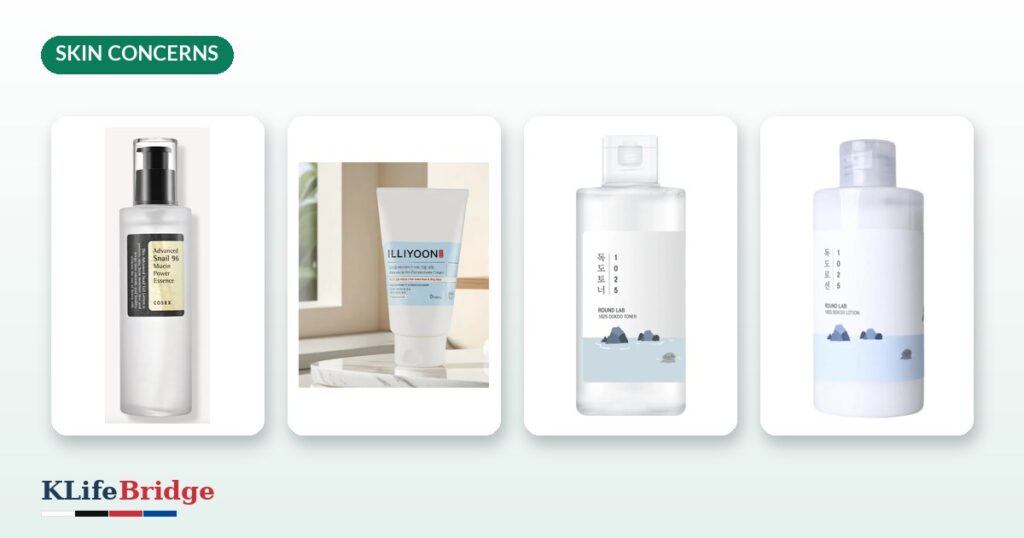
The three I’d hand a friend whose skin suddenly turned desert. No sponsorships, as always — just well-loved, well-reviewed, affordable picks (under $20) my daughter and I stand behind:
1. Round Lab 1025 Dokdo Toner ·
The hydrating toner that tops Korean bestseller lists year after year. Gentle enough for the most reactive skin, and perfect for the two-layer technique.
2. COSRX Advanced Snail 96 Mucin Power Essence ·
The moisture-holding middle layer. Cushiony, calming, and one of the most reliable “my skin just looks healthier now” products in all of K-beauty.
3. Illiyoon Ceramide Ato Concentrate Cream ·
Korea’s family-sized ceramide workhorse. Fragrance-free, deeply comforting, excellent on the face and even better on those itchy shins and forearms winter loves to torment. If night-time itching is part of your dryness story, this cream after a warm (not hot!) shower is the first thing to try.
Prices approximate at time of writing; all are on Amazon, YesStyle, and Olive Young Global.
A Few Habits That Quietly Make Dryness Worse
Products can only do so much if daily habits are working against them. A few worth checking:
Central heating and air conditioning. Both strip humidity from the air, which pulls moisture straight out of your skin all day and night. A small bedroom humidifier is one of the cheapest, most effective “skincare” tools you can buy for menopausal dryness — many women notice calmer skin within a week.
Over-exfoliating. When skin looks dull and flaky, the instinct is to scrub or reach for stronger acids. For a dry, compromised barrier this backfires — it strips further and invites more irritation. Ease off exfoliation while you rebuild; gentle is the whole strategy.
Not drinking enough — and drinking too much of the wrong things. Hydration from the inside is a supporting player, not a cure (you can’t drink your way out of a broken barrier), but chronic dehydration, plus a lot of caffeine and alcohol, doesn’t help. Think of water as one small lever among many.
Skipping the humble step of face oil. A drop or two of a well-chosen facial oil pressed over your night cream can be a lovely final seal for very dry skin — not instead of your moisturizer, but on top of it, locking everything in.
When Dryness Is More Than Menopause
Most sudden midlife dryness is the hormonal, barrier story described above — but not all of it. If your dryness comes with a persistent rash, cracking or bleeding skin, intense flaking that won’t budge, or other new symptoms (fatigue, hair changes, unusual thirst), it’s worth a doctor’s visit. Thyroid changes, certain medications, and skin conditions like eczema can all masquerade as “just menopause.” Good skincare helps every one of these, but some need a diagnosis too — and there’s no reason to suffer through something treatable.
What to Expect, and a Word of Encouragement
Hydration responds fast — this isn’t a six-month project like dark spots. Most women feel the tightness ease within days of switching to damp-skin application and the three-layer method. Give the full barrier repair four to six weeks: that’s roughly one skin cycle at our age, enough time for the ceramide restocking to show up as skin that stays comfortable all day instead of begging for cream by noon. The night itch usually calms as the barrier seals.
And a small reframe that helped me: this isn’t your skin failing. It’s your skin asking for a different kind of care than it needed at 35 — a little more deliberate, a little more layered, a little more gentle. Ten extra thoughtful minutes a day. As routines go, it’s a kind one — and honestly, those quiet minutes have become something I look forward to rather than another chore on the list.
New to all of this? Start with the 5-step routine guide, then the seven starter products. If your dryness comes with new sensitivity and redness, the barrier-repair theme continues in my guide to suddenly-reactive skin.
On My Own Shelf
Since I only recommend what I’d genuinely reach for, here’s what I actually use for dry, thirsty midlife skin right now (no sponsorships — just my real bathroom shelf):
- Hanskin Real Complexion Hyaluron Skin Essence — a lightweight hyaluronic-acid-and-collagen essence I pat on as my first “water” layer; gentle enough for dry, sensitive skin.
- Beauty of Joseon Dynasty Cream — a rich, comforting moisturizer (rice bran, niacinamide, squalane) that’s become my winter staple when my skin feels tight.
- medicube Jelly Cream — a hyaluronic-acid, ceramide, and peptide gel-cream I like on less-dry days for lightweight but long-lasting hydration.
Related Reads on KLifeBridge
If this was helpful, you may also like:
- Why Hyaluronic Acid Alone Isn’t Fixing Your Dry Skin
- Itchy Skin at Night After 50
- Suddenly Sensitive: Reactive Skin in Your 40s
- The 5-Step Korean Skincare Routine for Skin Over 40
Sources & further reading
The science behind menopausal dryness and ceramide-based barrier repair:
- Lephart ED, Naftolin F. Menopause and the Skin. Dermatol Ther (Heidelb), 2020 — declining estrogen reduces oil, hyaluronic acid, and barrier integrity. view study
- Lodén M. Role of topical emollients and moisturizers in the treatment of dry skin barrier disorders. Am J Clin Dermatol, 2003 — ceramide-dominant moisturizers decrease transepidermal water loss and repair the barrier. view study
- American Academy of Dermatology — Caring for your skin in menopause. aad.org
This article is for general information only and isn’t medical advice. Dryness with rashes, cracking, bleeding, or that resists a month of consistent care deserves a visit to your doctor or dermatologist — as does any dryness accompanied by other new symptoms.